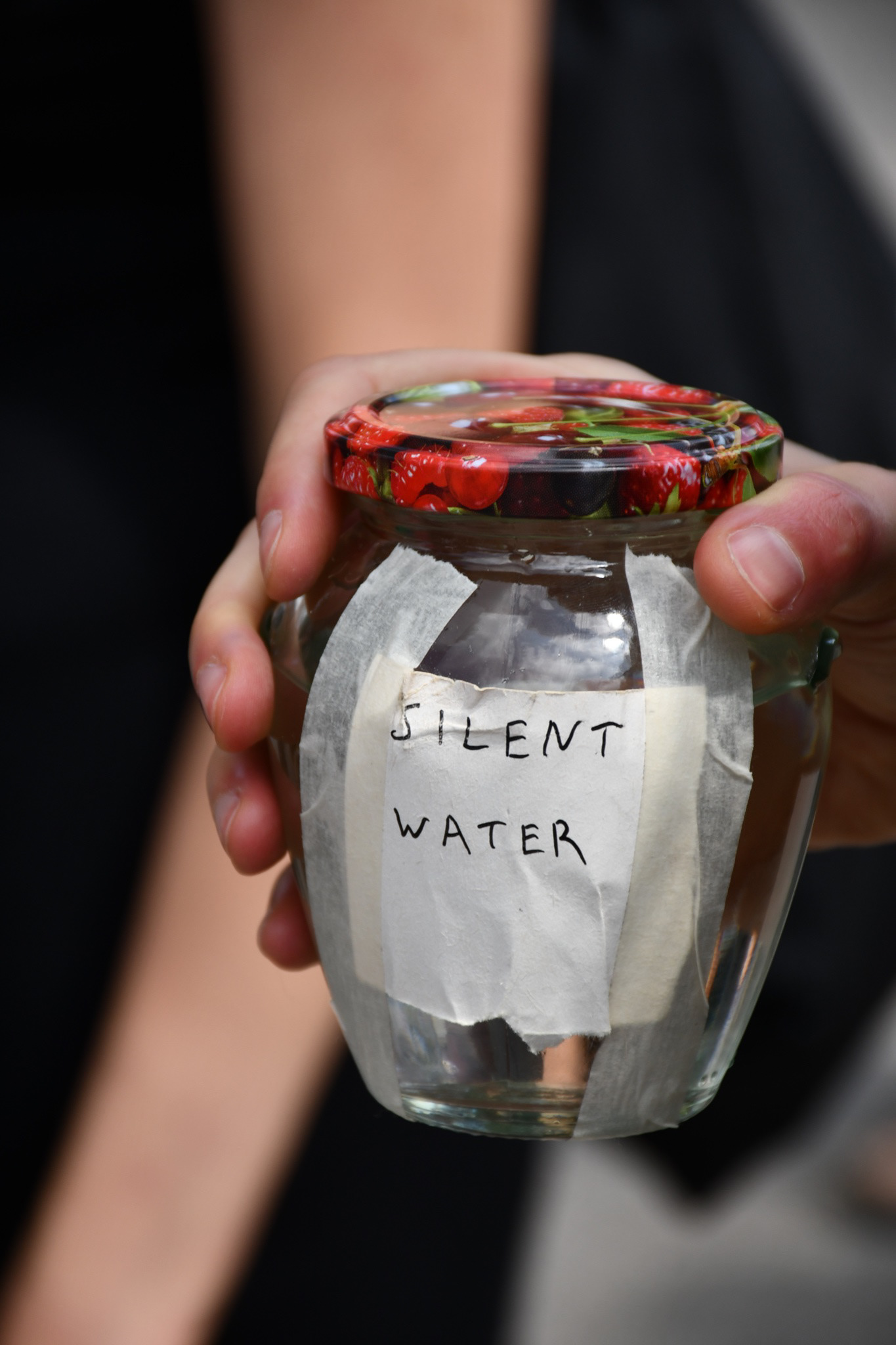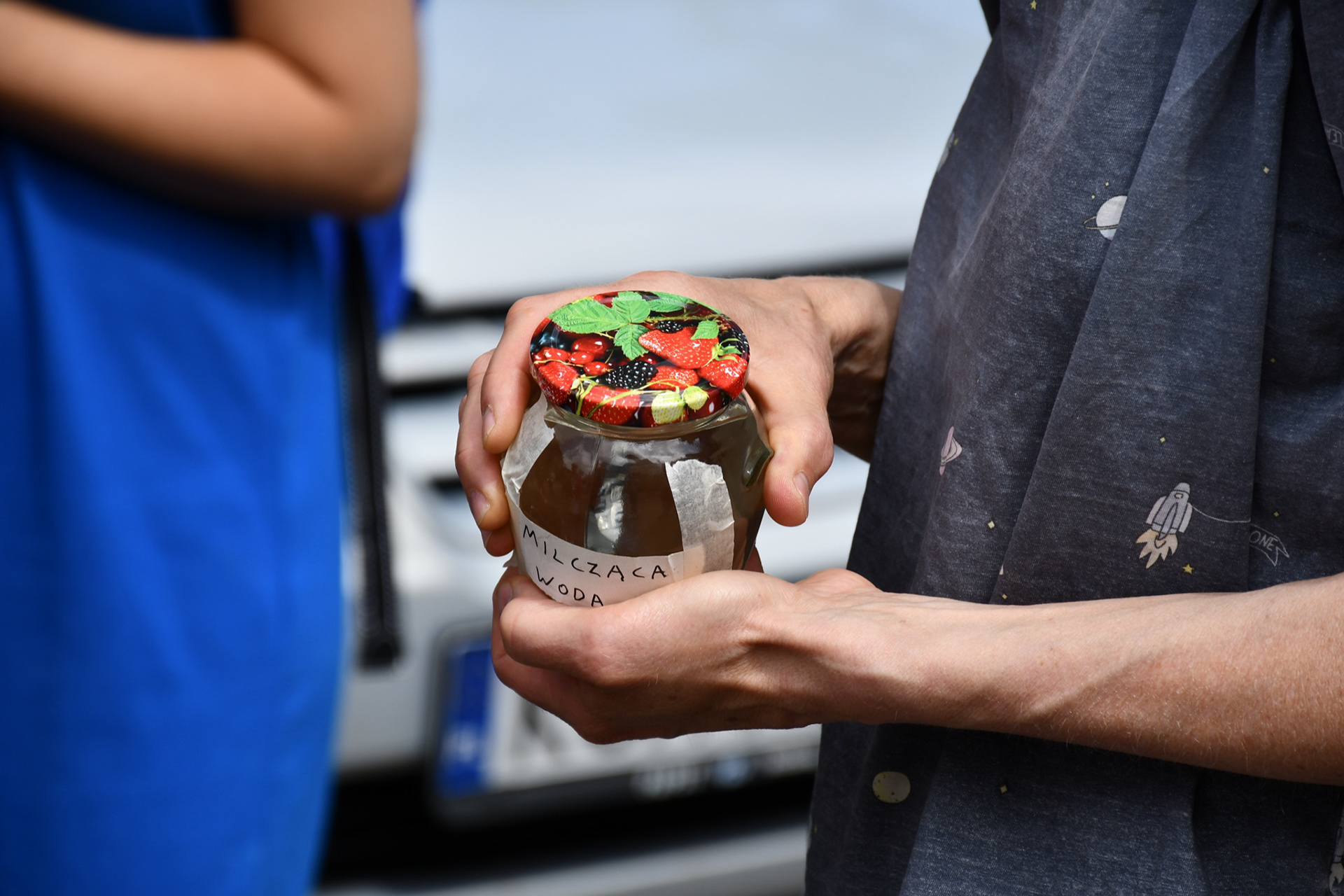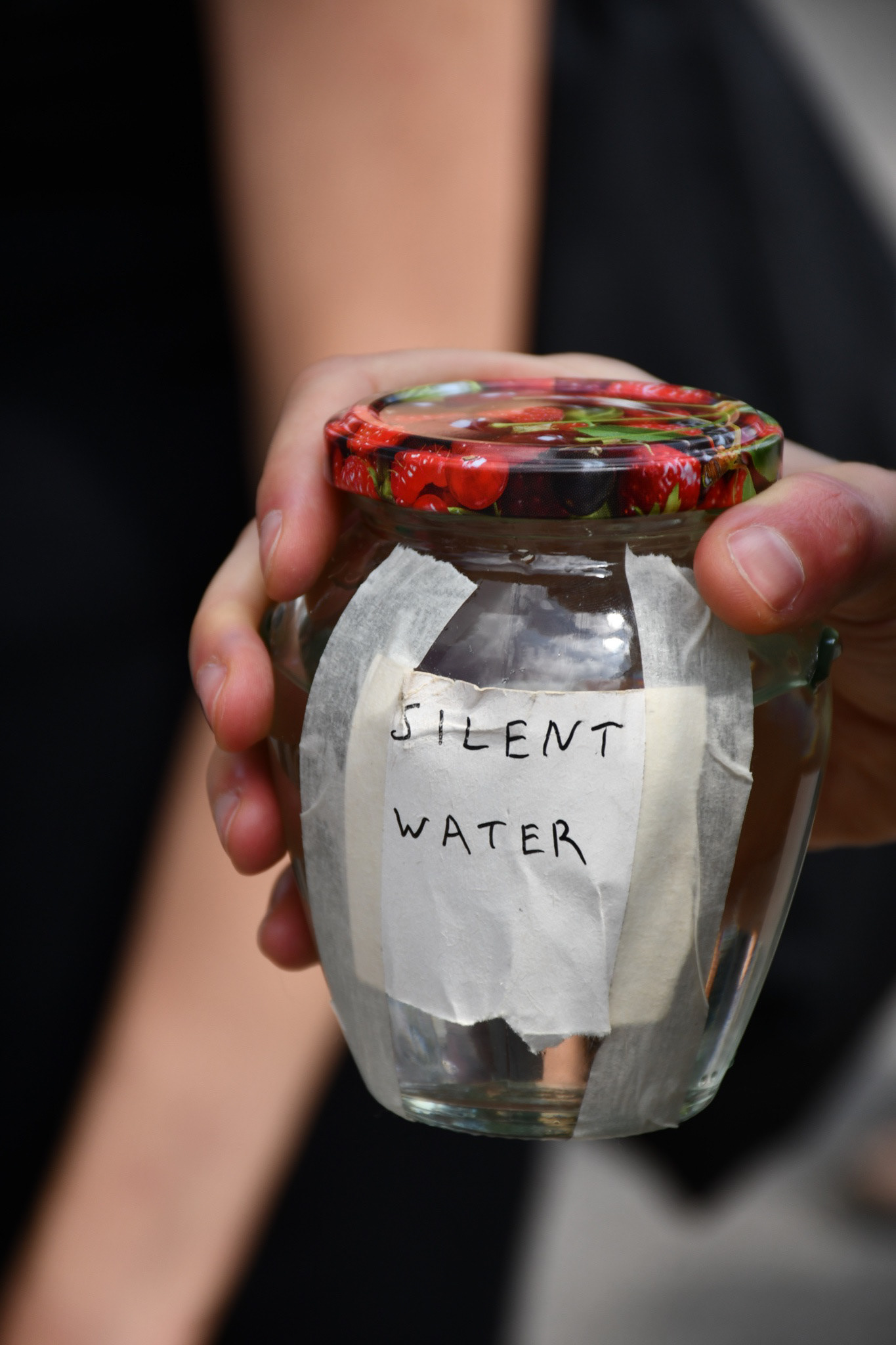
Among the Slavs, the term “silent water” referred to water drawn from a flowing spring (so-called “living water”) after nightfall and carried home in silence. Living water combined elements of fertility and death. Because it emerged from the depths of the earth, it was cold and mute like a grave, and was imagined to carry the magical properties of the otherworld. In order not to lose these qualities, one had to refrain from modifying it in any way. Therefore, it was required that the water be collected after dark and kept in absolute silence until the ritual began.
The concept of “silent water” also entered Jewish culture. In Yiddish it was called Sztilwaser or sztilszwajgnde waser, and the term was translated into Hebrew as majim shetukim — “silent water” (Dr. Marek Tuszewicki).
The Silent Water Walk is part of a long-term artistic project by Marta and Kasia Sala and Robert Yerichmiel Sniderman. The project focuses on working with memory surrounding the former Ester Square in Chrzanów, where the Great Synagogue once stood before being demolished in 1973, and where a weeping willow later grew. The willow was unexpectedly cut down in 2018. Before World War II, the town of Chrzanów was inhabited in nearly half by a Jewish community, yet the memory of it and its history has been fading year by year.
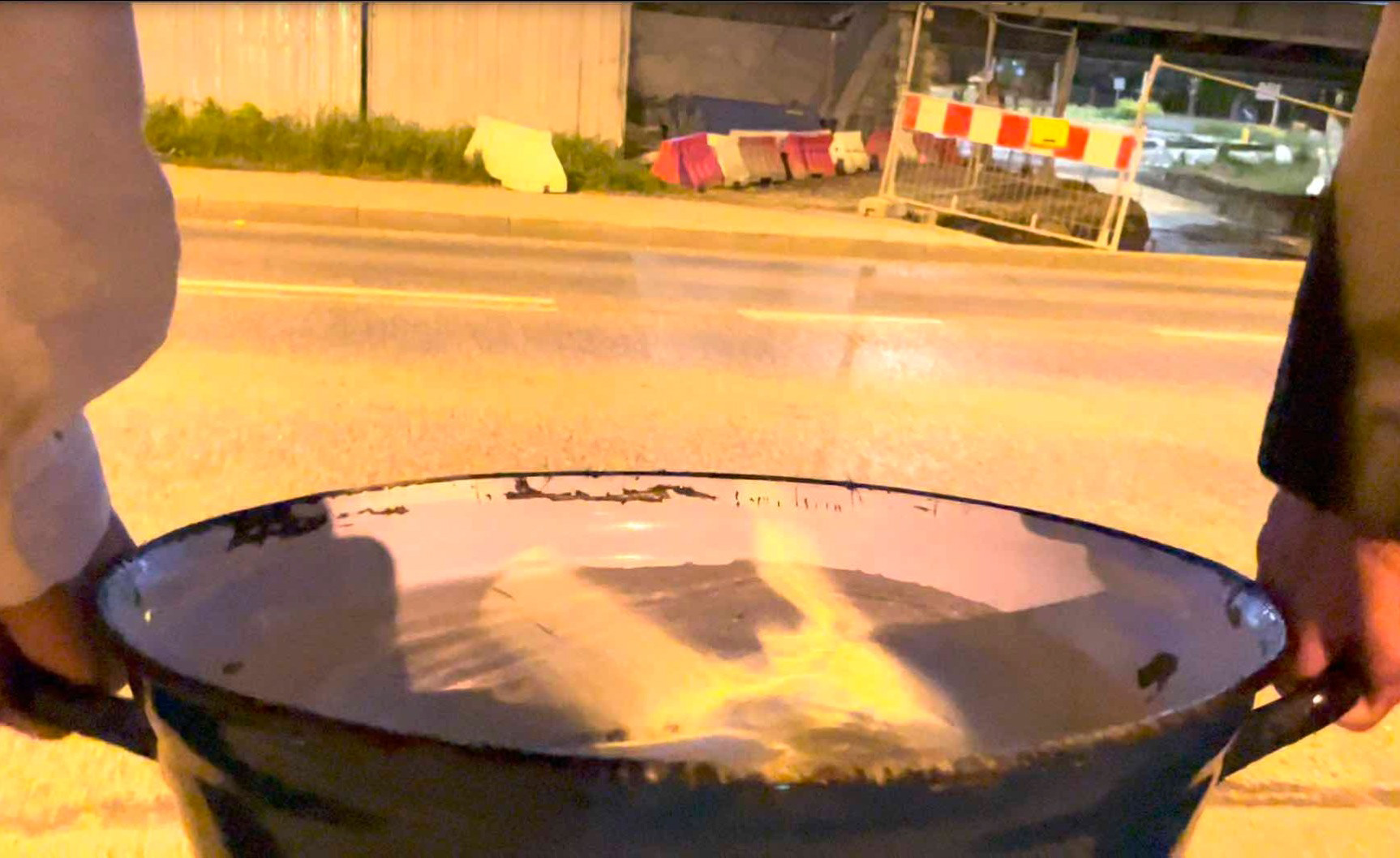
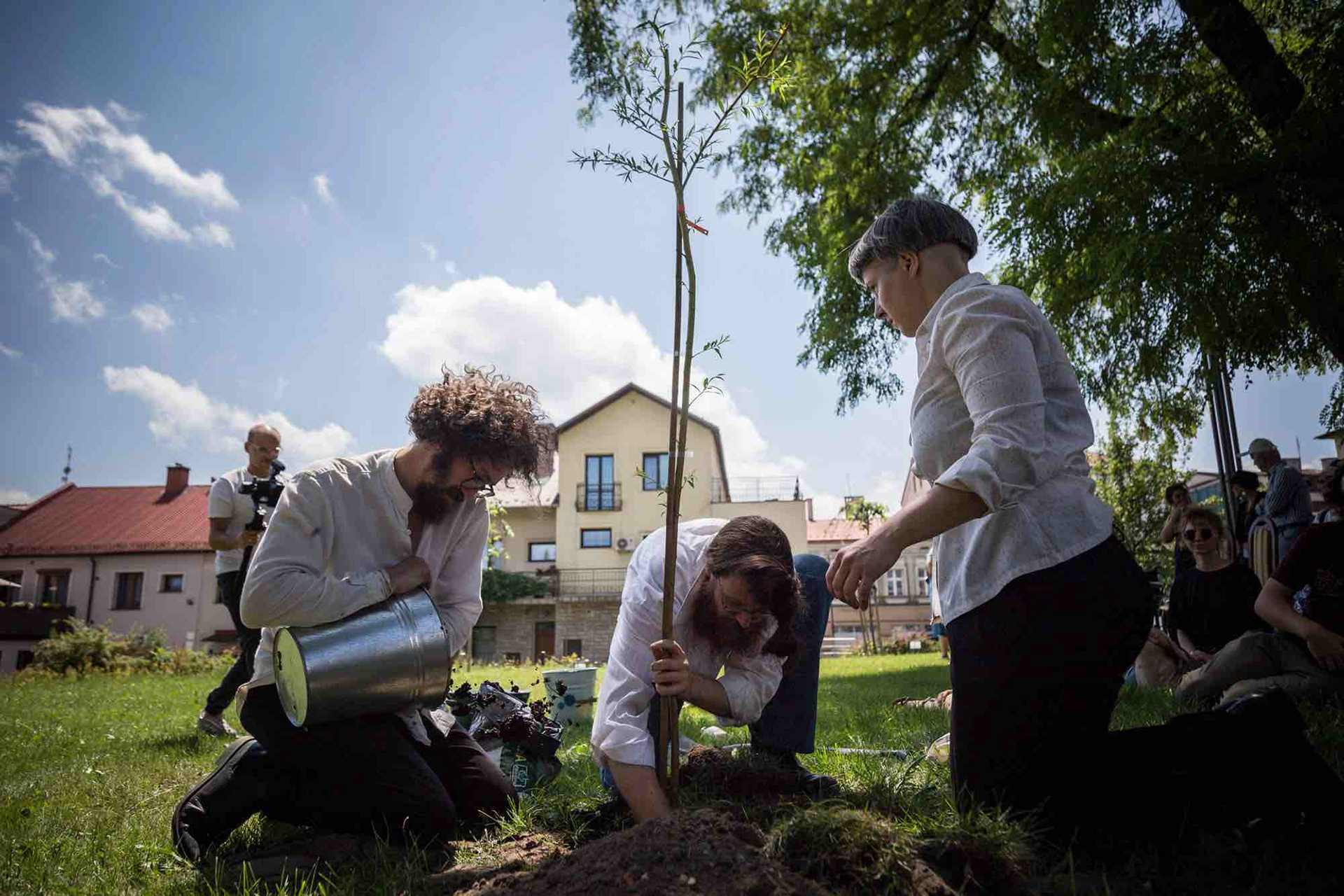
In a shared ritual with the residents of Chrzanów and other participants, the artists replanted a weeping willow at the site of the former synagogue and named it Esther’s Willow. On the evening before the tree was planted, I led the Silent Water Walk in Chrzanów. Water from the Vistula and the Chechło rivers was distributed among all participants of the procession, and at the end we used it to water Esther’s Willow.